
Innovation Center Proposal: Supporting Domestic Production
Khat Group's Innovation Center proposal — a practical framework based on global and domestic experience to support domestic manufacturing. Covers technology transfer, risk-sharing models, public-private partnerships, and policy recommendations for sustainable industrial development in Iran.

Drawing on years of experience in technology acquisition and production line commissioning, Khat Group has developed a comprehensive Innovation Center Proposal — a practical framework to support domestic manufacturing in Iran through structured technology transfer, risk mitigation, and public-private collaboration.

Core Concept
An Innovation Center acts as a structured intermediary between:
- Industry needs (identified via customs data & industry engagement)
- Technology providers (universities, research institutes, tech companies)
- Investors & government (funding, policy, guarantees)
The center manages the full lifecycle: Need identification → Lab prototype → Pilot scale → Industrial demo → Commercial production
Six-Step Implementation Model
1. Need Identification
Intermediary firms analyze customs data & engage industries to map technology gaps — prioritizing import substitution opportunities.
2. Process Design Model
Four-stage maturity gate:
- Lab prototype — 50% of import quality
- Semi-industrial pilot — 70% quality
- Industrial demo — 75% quality
- Commercial grade — 100%+ (match/exceed import)
3. Investment Model Design
Flexible financing structures:
- Venture capital / risk capital
- Interest-free long-term loans (innovation funds)
- Pre-purchase agreements
- Government-backed capital guarantees
- Crowdfunding / collective investment
4. Executor Selection
Multi-disciplinary teams:
- University research teams
- Tech startups / knowledge-based firms
- Specialized engineering companies Selected via transparent evaluation by intermediary, client, and experts.
5. Government Support & Policy
Smart legislation with time-bound measures:
- Gradual tariff reduction on target imports
- Quality milestones tied to protection periods
- Tax incentives for domestic R&D investment
- Streamlined permitting for pilot plants
6. Execution & Oversight
Contracted execution with multi-stakeholder steering committee:
- Executors, intermediary, clients, government reps
- Periodic milestone reviews
- Adaptive management for course correction
Equity Structure (Flexible)
- Client company (industrial end-user)
- Importers (mandated to co-invest)
- Collective investment / public participation
- Venture capital / risk funds
- Government funds & banks
- Intermediary firm (center operator)
Khat Group’s Role
With a track record of commissioning multiple production lines (ceramic magnets, advanced ceramics, SrCO₃, textile ceramics), Khat Group is positioned to operate such an Innovation Center — bridging lab-scale research to commercial production.
Reference: Slideshare presentation by Dr. Mohammad Talaeizadeh (CEO, Khat Group).
Khat Group — Building the bridge from laboratory to production line.
Related reading
 Projects
 Ceramic Vessel Production Line Investment: A 50% ROI Opportunity
Khat Group offers a complete turnkey solution for ceramic tableware production — 30 tons/year capacity, 2.5B Toman investment, 50% ROI, 3-4 months to commercial production, full technology transfer, training, and optional buy-back guarantee.
 Projects
 How to Support Domestic Production: A Two-Pronged Policy Framework
Khat Group's comprehensive policy proposal for supporting domestic manufacturing in Iran — diagnosing three core problems (production, imports, liquidity) and presenting a two-track solution: (1) Innovation Center model with risk-sharing & technology transfer, (2) Import reform with mandatory local content & smart tariffs. Includes six-step implementation, equity models, and government policy levers.
 Projects
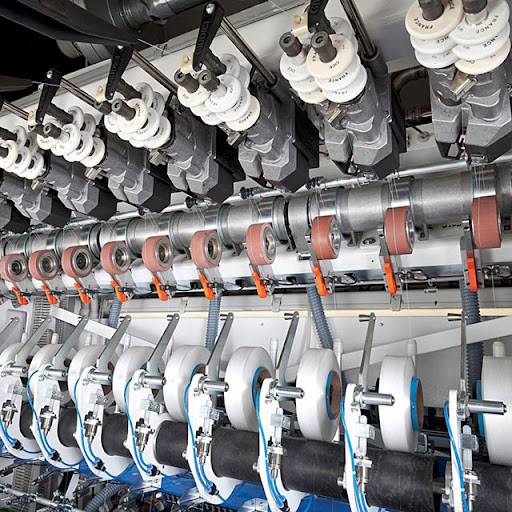
 Textile Ceramic Parts: Domestic Production for Iran's Textile Industry
Khat Group manufactures high-precision ceramic components for textile machinery — guides, rollers, eyelets, pig tails, and cutters — using Ceramic Injection Molding (CIM). Domestic production eliminates import dependency, reduces yarn breakage, improves fabric quality, and cuts costs.