
How to Support Domestic Production: A Two-Pronged Policy Framework
Khat Group's comprehensive policy proposal for supporting domestic manufacturing in Iran — diagnosing three core problems (production, imports, liquidity) and presenting a two-track solution: (1) Innovation Center model with risk-sharing & technology transfer, (2) Import reform with mandatory local content & smart tariffs. Includes six-step implementation, equity models, and government policy levers.

Everyone talks about supporting domestic production, but what’s the practical roadmap? Khat Group presents a comprehensive diagnosis of Iran’s industrial challenges and a two-track policy framework — combining an Innovation Center model with smart import reform — to bridge the gap between rhetoric and results.
Three Core Problems
1. Production-Side Failures
- Unidentified needs — No systematic mapping of industrial technology gaps
- Financing gap — Researchers lack capital; existing loans require real estate collateral, short tenors, ignore R&D risk
- Quality gap — Prototypes far from commercial grade; no structured scale-up pathway
- Static mindset — “Build once, run forever” ignores continuous improvement needs
2. Import-Side Distortions
- Uncontrolled imports — Traders import without regard to domestic capacity
- Tariff inefficiency — Ad-hoc tariffs don’t incentivize domestic investment
- Importer advantage — Deep-pocketed traders undercut domestic startups
- Fake trading licenses — Exploit regulatory loopholes
3. Liquidity Misallocation
- Bank bias — Banks prefer real estate (low risk, high return) over production
- Savings misdirection — Public savings flow to unproductive assets
- Inflation erosion — Savings lose value; no productive investment channel
Two-Track Solution
Track 1: Innovation Center Model (Supply-Side)
Six-Step Implementation
| Step | Action |
|---|---|
| 1. Need Identification | Intermediary firms map needs via customs data & industry engagement |
| 2. Process Design | 4-stage maturity: Lab (50%) → Pilot (70%) → Demo (75%) → Commercial (100%+) |
| 3. Investment Design | Venture capital, interest-free loans, pre-purchase, govt guarantees, crowdfunding |
| 4. Executor Selection | University teams, tech startups, engineering firms — transparently evaluated |
| 5. Government Support | Smart tariffs, tax incentives, streamlined permits, milestone-linked protection |
| 6. Execution & Oversight | Multi-stakeholder steering committee with periodic reviews |
Equity Partners: Client industry, importers (mandated), public crowdfunding, VC funds, govt funds/banks, intermediary operator.
Track 2: Import Reform (Demand-Side)
Six-Step Import Reform
| Step | Action |
|---|---|
| 1. Need Census | Intermediary maps import data to identify substitutable products |
| 2. Production Pathway Design | 4-stage: Lab (50%) → Pilot (70%) → Industrial (75%) → Commercial (100%+) |
| 3. Investment Model | Risk capital, interest-free loans, pre-purchase, govt-backed capital protection |
| 4. Executor Selection | University/tech firms selected via transparent evaluation |
| 5. Smart Government Policy | Tariffs phased down as domestic quality improves; tax incentives |
| 6. Execution & Monitoring | Multi-party steering committee with periodic reviews |
Equity Structure: Client industry, importers (mandated co-investment), public crowdfunding, VC funds, govt/bank guarantees, intermediary operator.
Government Role: Time-bound legislation linking tariff phase-down to domestic quality milestones.
Key Principles
- Risk Sharing — No single party bears full R&D risk
- Quality Gates — Protection tied to measurable quality milestones
- Mandatory Importer Participation — Turns importers into production partners
- Public Participation — Crowdfunding broadens ownership & accountability
- Government as Enabler — Smart policy, not direct production
- Continuous Improvement — Built-in quality escalation from 50% → 100%+
Why This Works
- Domestic producers get de-risked pathway to commercialization
- Importers become stakeholders in domestic capacity
- Investors get de-risked, milestone-gated opportunities
- Government gets measurable import substitution & job creation
- Public gets productive savings channel & transparency
Implementation Roadmap
| Phase | Timeline | Milestones |
|---|---|---|
| Pilot | 0–6 months | 3–5 Innovation Centers, 10–15 projects |
| Scale | 6–24 months | 20+ centers, 100+ projects, policy framework enacted |
| Mainstream | 24+ months | National platform, automated matching, continuous pipeline |
Khat Group — Turning industrial policy into production reality. Contact us to discuss implementation.
Khat Group — From policy to production line.
Related reading
 Projects
Ceramic Vessel Production Line Investment: A 50% ROI Opportunity
Khat Group offers a complete turnkey solution for ceramic tableware production — 30 tons/year capacity, 2.5B Toman investment, 50% ROI, 3-4 months to commercial production, full technology transfer, training, and optional buy-back guarantee.
 Projects
Innovation Center Proposal: Supporting Domestic Production
Khat Group's Innovation Center proposal — a practical framework based on global and domestic experience to support domestic manufacturing. Covers technology transfer, risk-sharing models, public-private partnerships, and policy recommendations for sustainable industrial development in Iran.
 Projects
Textile Ceramic Parts: Domestic Production for Iran's Textile Industry
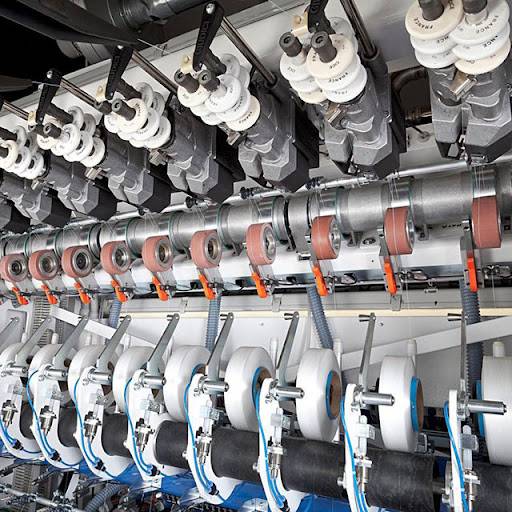
Khat Group manufactures high-precision ceramic components for textile machinery — guides, rollers, eyelets, pig tails, and cutters — using Ceramic Injection Molding (CIM). Domestic production eliminates import dependency, reduces yarn breakage, improves fabric quality, and cuts costs.