
Custom Advanced Engineering Ceramic Parts Manufacturing
A practical guide to custom ceramic part manufacturing: material selection, forming methods, shrinkage and tolerance control, ordering checklist and buyer FAQs.
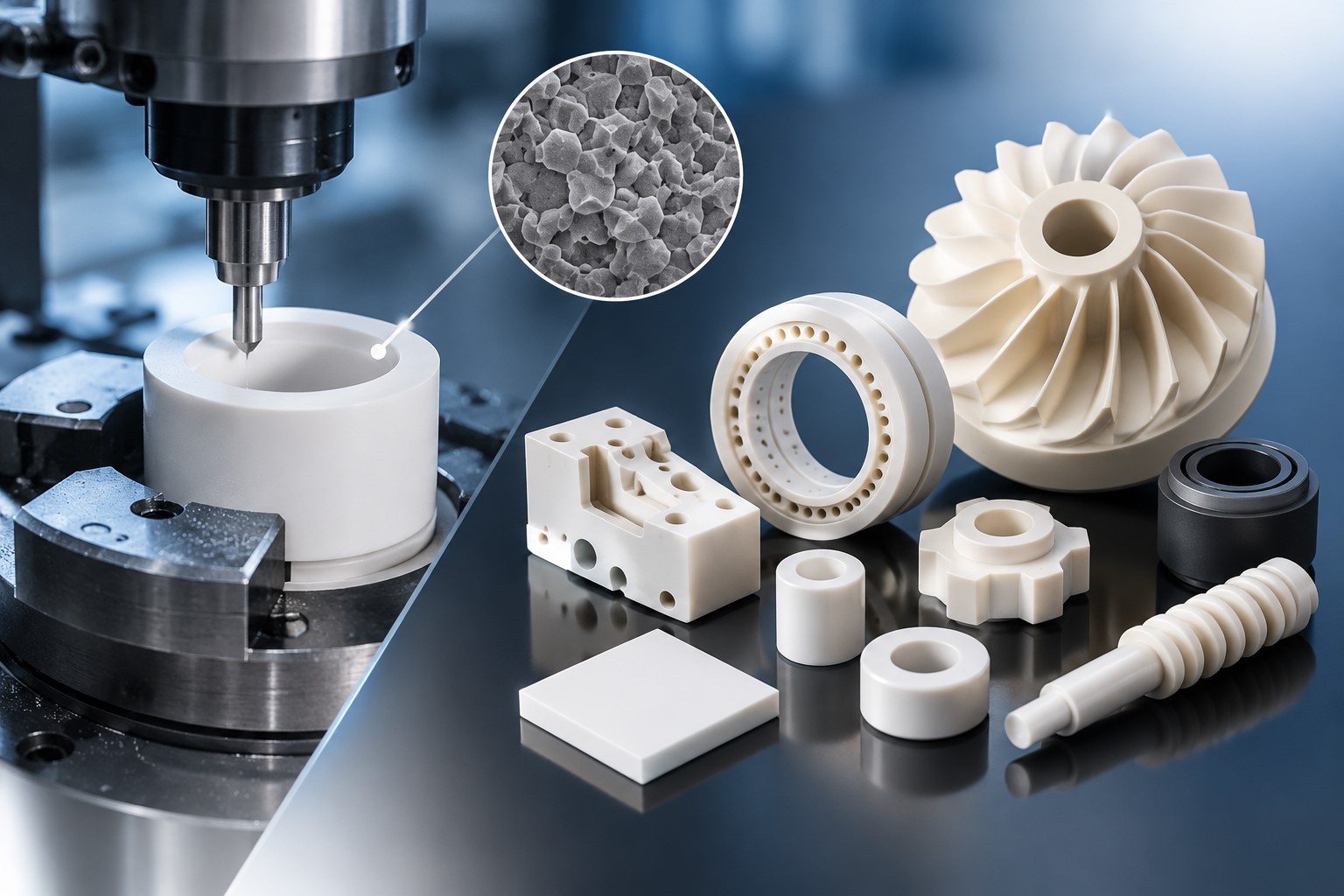
Custom ceramic part manufacturing starts long before a drawing reaches the shop floor. The real starting point is the operating envelope: temperature, load, wear mode, chemical exposure, and available space. Engineering ceramics earn their place there because they hold hardness and thermal stability where metals soften and polymers creep. They are also brittle, so shrinkage, tolerances, and tooling must be planned rather than corrected later. This guide covers the full route — material selection, forming, firing, diamond machining, and quality control — plus the information a supplier needs to quote and produce a part that works the first time. Each decision affects service life and accuracy.
Short answer: Custom engineering ceramic part manufacturing converts a high-purity ceramic powder into a component with defined geometry, tolerances, and properties. The route covers material selection, green-body forming, high-temperature sintering, diamond machining, and dimensional and microstructural inspection. The result is a wear-, heat-, and corrosion-resistant part for conditions where metal or polymer components fail prematurely.
Table of Contents
- What Is an Engineering Ceramic Part?
- Engineering Ceramic Materials Compared
- Manufacturing Steps: From Powder to Finished Part
- Forming Methods Compared
- What Drives Dimensional Accuracy and Quality
- Material and Process Selection Checklist
- What to Prepare Before Ordering
- Frequently Asked Questions
- Conclusion
What Is an Engineering Ceramic Part?
An engineering ceramic is a non-metallic, inorganic material made from refined powders whose microstructure is set during firing. What separates it from traditional pottery is purity, consistency, and repeatability: porosity, grain size, and grain-boundary phases are controlled so the part behaves predictably under load, heat, and chemical attack. That predictability is why advanced ceramic parts appear where metal wears out quickly or polymer deforms at temperature.
Applications usually fall into five groups:
- Wear and friction: blast nozzles, mechanical seals, textile guides and rollers, cutting edges; see our article on textile ceramic parts.
- High temperature and thermal shock: burner nozzles, crucibles, casting dies, kiln furniture, and engine components.
- Corrosive environments: chemical pump parts, control valves, petrochemical seals, and acid-contact components.
- Electrical and electronic: high-voltage insulators, circuit substrates, piezoelectric sensors, and vacuum components.
- Medical and dental: implants, crowns, bridges, surgical tools, and imaging.
Steelmaking is another mature market: tundish nozzles, refractory plates, and strip-guide rollers are routinely ceramic; see ceramic parts in the steel industry.
Engineering Ceramic Materials Compared
No single ceramic is best for every duty. Selection should be driven by four variables: working temperature, dominant load type (wear, impact, or fatigue), chemical environment, and cost ceiling. The table below compares five common families at a general level.
| Material | Defining property | Continuous service temperature (approx.) | Typical applications |
|---|---|---|---|
| Alumina (Al₂O₃) | High hardness and wear resistance, electrical insulation, moderate cost | Up to about 1500–1700 °C | Mechanical seals, insulators, textile rollers, electronic substrates |
| Zirconia (ZrO₂, usually Y-TZP) | High fracture toughness and better impact resistance than most oxides | Up to about 1000 °C | Cutting tools, wear parts, implants, pins and bushings |
| Silicon carbide (SiC) | High thermal conductivity, excellent thermal shock and wear resistance | Up to about 1600–1750 °C in air | Burner nozzles, heat exchangers, seals, armor |
| Silicon nitride (Si₃N₄) | Good strength and toughness, high thermal shock resistance, low weight | Up to about 1200–1400 °C | Ceramic bearings, rollers, engine components |
| Cordierite (Mg₂Al₄Si₅O₁₈) | Very low thermal expansion, thermal insulation | Up to about 1200–1300 °C | Kiln furniture, catalyst substrates, shock-resistant parts |
Continuous service temperature is not the same as short-term peak. Steam, slag, molten metal, or a reducing atmosphere can lower the practical limit sharply. For a scientific review, see this advanced ceramic materials overview.
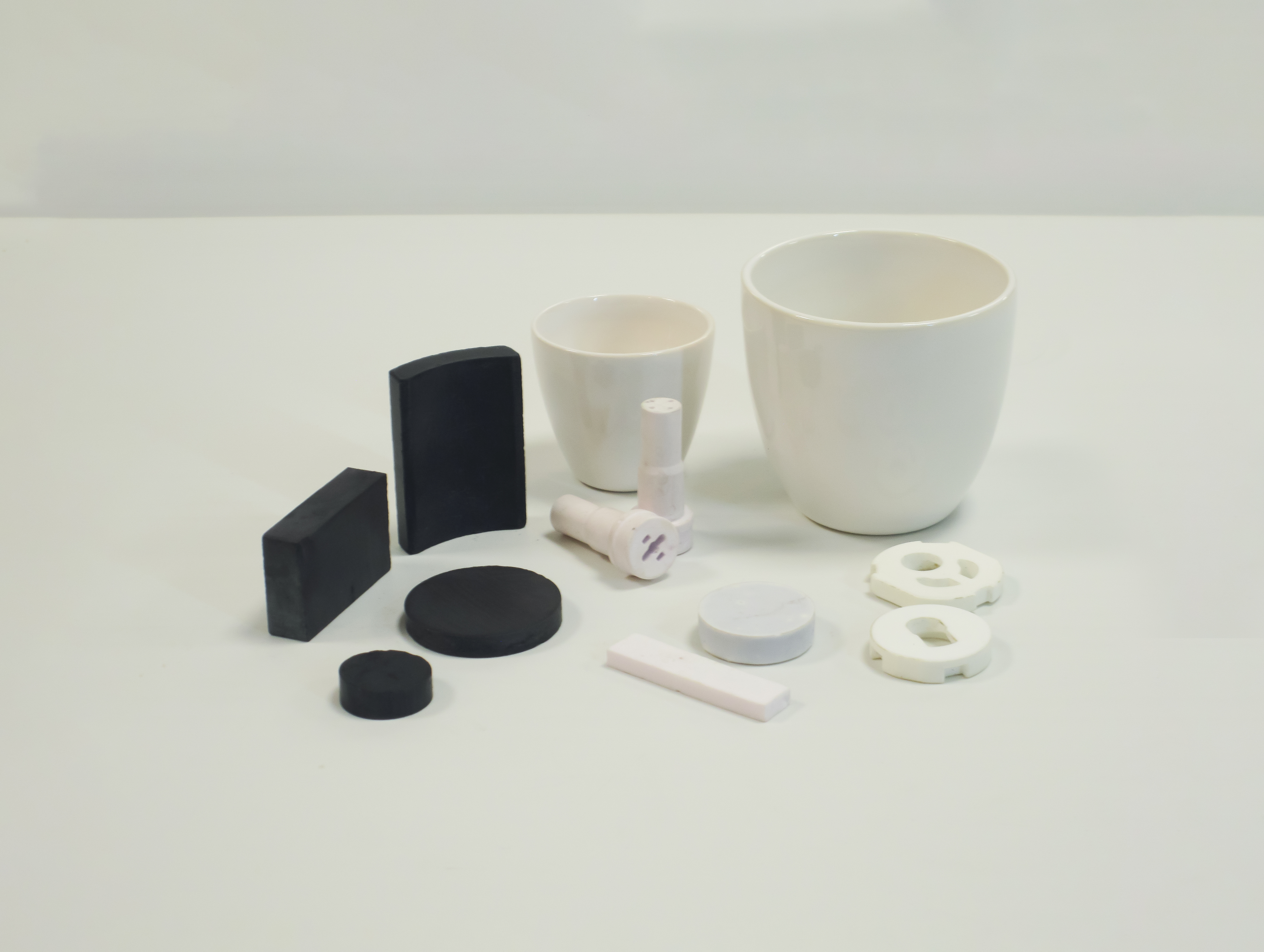
A property table is rarely enough. The useful question is how the part will fail: wear, corrosion, thermal shock, or fatigue. Under impact, zirconia usually beats alumina; under pure sliding wear at high temperature, fine-grained alumina or SiC is often better. When the duty cycle is complex, technical review before manufacturing is cheaper than discovering the wrong grade after tooling is cut.
Manufacturing Steps: From Powder to Finished Part
Plants differ in equipment, but the logic is consistent: turn a homogeneous powder into a green body, then densify and finish it.
- Powder preparation: control purity, particle size, and distribution. Agglomerates or metallic contamination here become porosity and cracks later.
- Mixing and slurry preparation: add solvent, dispersant, binder, and lubricant in precise ratios. Uniformity affects shrinkage and strength; ceramic slurry and spray drying are central to pressable granules.
- Forming: choose the route based on geometry, volume, and tolerance. The next section compares six methods.
- Drying and green machining: remove moisture at a controlled rate to avoid cracking, and machine features that would be costly after firing.
- Binder removal and pre-firing: burn out organics slowly; heating too fast traps gas and can split the body.
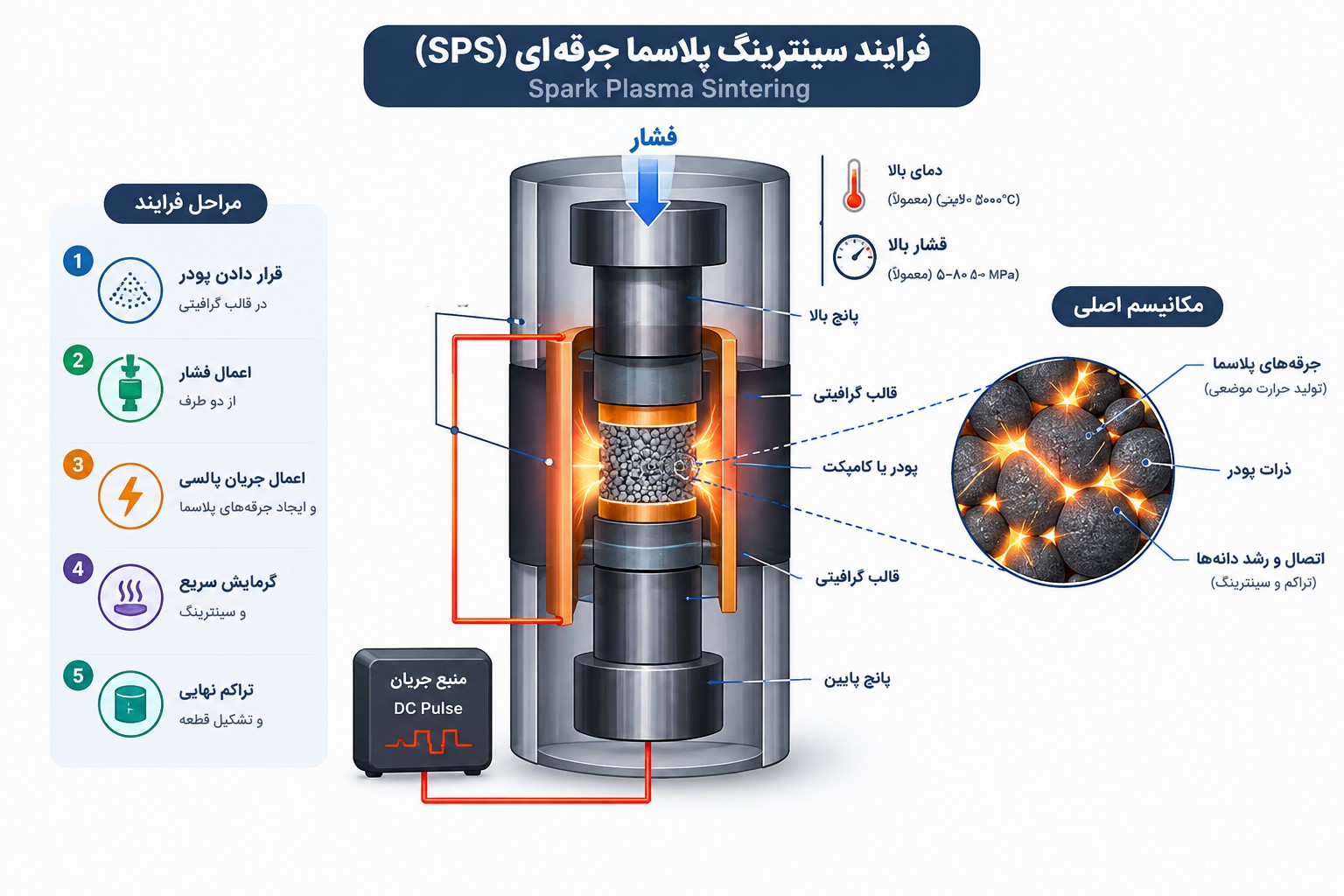
- Sintering: densify the part through atomic diffusion at high temperature. Sintering of ceramics closes porosity and sets the final microstructure.
- Machining and finishing: diamond grinding, lapping, polishing, and drilling. Fired ceramic is cut only with diamond tooling at controlled removal rates.
- Quality control: dimensional inspection, density measurement, microstructural review, and — for critical parts — mechanical or dye penetrant testing.
Forming Methods Compared
The forming route sets tooling cost, geometric freedom, and the tolerance ceiling. These are the six methods most buyers encounter.
Uniaxial Pressing
Dry or slightly moistened powder is compacted in a steel die under axial pressure; suits discs, rings, and blocks.
- Advantages: fast cycle, low tooling cost, good repeatability at medium to high volume.
- Limitations: uneven density in thick parts, limited geometry, and secondary machining for fine features.
Cold Isostatic Pressing (CIP)
Powder is sealed in an elastomer bag and pressed from all directions by fluid pressure.
- Advantages: uniform density, suitable for large and long parts, less warpage during firing.
- Limitations: weaker as-pressed tolerance, more machining allowance, and slower than uniaxial pressing.
Slip Casting
Ceramic slurry is poured into a plaster mold; water is drawn out through the porous wall.
- Advantages: good for complex and hollow shapes, no expensive press, and large parts.
- Limitations: long cycle time, low green strength, and high sensitivity to slurry quality.
Extrusion
A ceramic paste is forced through a die to produce a constant cross-section.
- Advantages: continuous and economical for long sections such as rods, tubes, and profiles.
- Limitations: constant cross-section only, no closed internal cavities, and controlled drying.
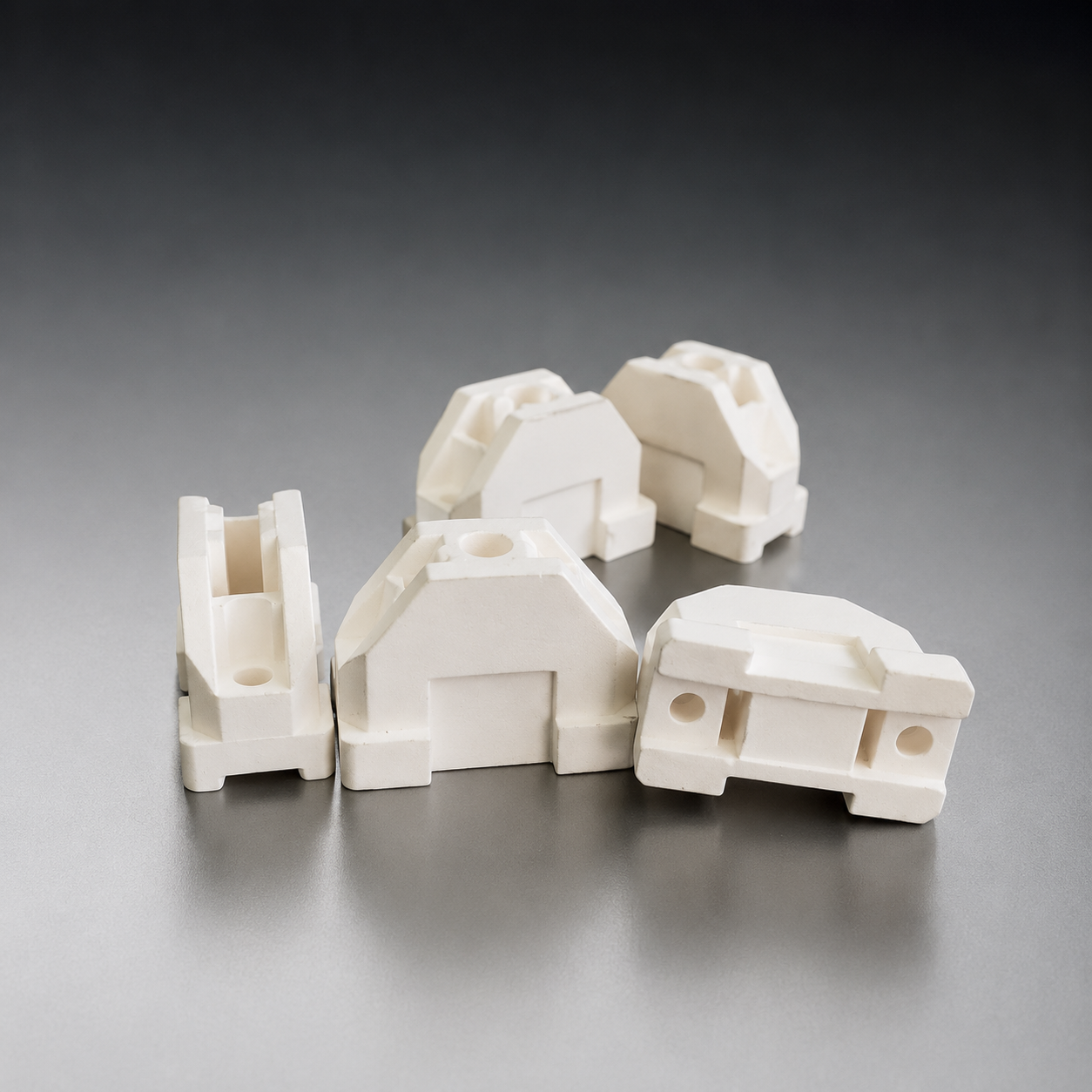
Ceramic Injection Molding (CIM)
Ceramic powder is compounded with a thermoplastic binder and injected into a mold at high pressure. It is built for complex geometry and volume.
- Advantages: high design freedom, good tolerance without secondary machining, repeatability, and smooth surfaces.
- Limitations: high tooling cost, controlled debinding, and limited part size and weight.
The process is covered in our article on ceramic injection technology and on the CIM parts product page.
Ceramic 3D Printing
Ceramic powder is deposited layer by layer as a paste, slurry, or bound filament, then fired.
- Advantages: freeform geometry and fast prototyping for one-off parts and design iteration.
- Limitations: high unit cost, more porosity and anisotropy, rougher surfaces, and weaker repeatability at volume.
What Drives Dimensional Accuracy and Quality
Sintering Shrinkage
Every ceramic shrinks during firing. Linear shrinkage typically falls in the 12–20% range and depends on material, forming route, and green density. Dies and drawings must be built around that factor; uneven shrinkage between directions causes warpage and out-of-tolerance dimensions.
Tolerances and Machining
Tolerance depends on the process. As-sintered parts commonly hold about ±0.5–1% of dimension; diamond machining can reach ±0.01–0.05 mm, and tighter limits are possible on small parts. Specifying tight tolerance without a functional reason multiplies cost; a drawing review can remove limits that add cost but not performance.
Firing Temperature and Atmosphere
Firing temperature controls density and grain size together: too low leaves porosity, too high coarsens grains and reduces strength. Oxides are usually fired in air; carbides and nitrides need vacuum or inert gas. Oxygen contamination during SiC or Si₃N₄ firing degrades grain-boundary phases.
Density Uniformity and Microstructure
A density gradient between core and surface becomes a shrinkage gradient during firing, producing cracks. Uniform powder distribution, uniform pressing pressure, and controlled heating are the three main levers for consistent microstructure. In optical or electrical parts, sub-one-percent porosity changes performance.
Material and Process Selection Checklist
Answer these questions before requesting a quote; unclear answers start the technical conversation.
| Question | Why it matters |
|---|---|
| What are the continuous and peak operating temperatures? | Defines the material family and temperature ceiling |
| What is the dominant failure mode: wear, impact, corrosion, or fatigue? | Narrows the choice between alumina, zirconia, SiC, and Si₃N₄ |
| What chemicals, melts, or vapors will contact the part? | Sets chemical resistance requirements and firing atmosphere |
| How complex is the geometry, and what is the annual volume? | Decides between pressing, CIM, casting, and printing |
| What tolerance is genuinely required? | Controls machining cost and lead time |
| Will the part be assembled to metal? | Drives thermal expansion matching and joint design |
Common Ordering Mistakes
- Choosing a material from a data sheet alone: hardness or toughness numbers without operating context can mislead.
- Ignoring sintering shrinkage: a drawing issued without shrinkage allowance will miss final dimensions.
- Unnecessary tight tolerances: limits below ±0.01 mm sharply increase machining cost.
- Leaving surface finish unspecified: required Ra should be defined up front; adding it later forces rework.
- Overlooking assembly conditions: a thermal expansion mismatch between ceramic and metal is a common crack source.
- Skipping the prototype: for new geometry, a first article and dimensional check reduce scale-up risk.
What to Prepare Before Ordering
To get a quote that is both accurate and manufacturable, prepare the following:
- 2D drawing and 3D model: dimensions, tolerances, GD&T, and measurement datums.
- Material or performance requirements: if the grade is open, describe the operating conditions instead.
- Operating temperature and thermal cycle: continuous, peak, and rate of change.
- Chemical environment: media, concentration, and temperature.
- Mechanical load: direction, magnitude, and type (static, impact, fatigue).
- Volume: prototype quantity, first production batch, and annual demand.
- Surface finish and special properties: Ra, allowable porosity, electrical or optical requirements.
- Assembly conditions: mating material and joining method.
What to prepare before ordering A drawing or 3D model, material or operating conditions, working temperature, chemical environment, only the tolerances you need, and order volume. Settle unresolved items first — changing them after tooling is cut is expensive. For a manufacturing cost estimate and feasibility check, this pack is enough.
Frequently Asked Questions
What is the minimum order quantity for ceramic parts?
It depends on the process. Pressed and machined parts can be economical at low volume, even as single pieces. CIM and 3D printing carry tooling or setup costs that dominate at low volume, so the economic starting point is usually several hundred to several thousand parts.
What is the difference between alumina and zirconia?
Alumina offers higher hardness and wear resistance at lower cost; zirconia offers higher fracture toughness and better impact resistance. For impact or fatigue loading, zirconia is often preferred. For pure sliding wear at higher temperature, alumina or silicon carbide is usually the better fit.
Why does a ceramic part shrink after firing?
Sintering closes the porosity between particles and densifies the body, which reduces its dimensions. The amount depends on material, forming route, and green density, and typically falls between 12 and 20% linearly. Tooling must be designed with the shrinkage factor included.
What tolerance can be achieved on ceramic parts?
As-sintered parts commonly hold about ±0.5–1% of dimension. Diamond machining can reach ±0.01–0.05 mm, with tighter limits possible on small parts. Tighter tolerance means more cost, longer lead time, and longer machining and inspection time. This should be justified by the application.
Can I order a ceramic part without a drawing?
For simple shapes, a physical sample may be enough. For engineering parts, a drawing or 3D model is essential; without one, tolerances and measurement datums are undefined and rework risk rises sharply. A dimensioned sketch is usually the minimum acceptable substitute.
Conclusion
Custom ceramic part manufacturing is a chain of decisions, not a single material choice. Material grade, forming route, tool design, shrinkage control, firing, and machining each shape cost and performance. Earlier review with complete information improves the chance of a repeatable, economical part.
If your component faces a hard duty cycle — high temperature, severe wear, or a corrosive environment — a technical conversation before design freeze can shorten the path to a producible prototype. Talk to our engineering team and review Khat Group’s technologies as a starting point.
Scientific Reference
Khat Group — from material selection to finished ceramic components, in one engineering chain.
Products in this article
Materials and products related to what you read.
 Ceramics
Alpha Alumina (α-Al₂O₃)
High-purity alpha aluminum oxide powder — three purity grades, four particle-size ranges
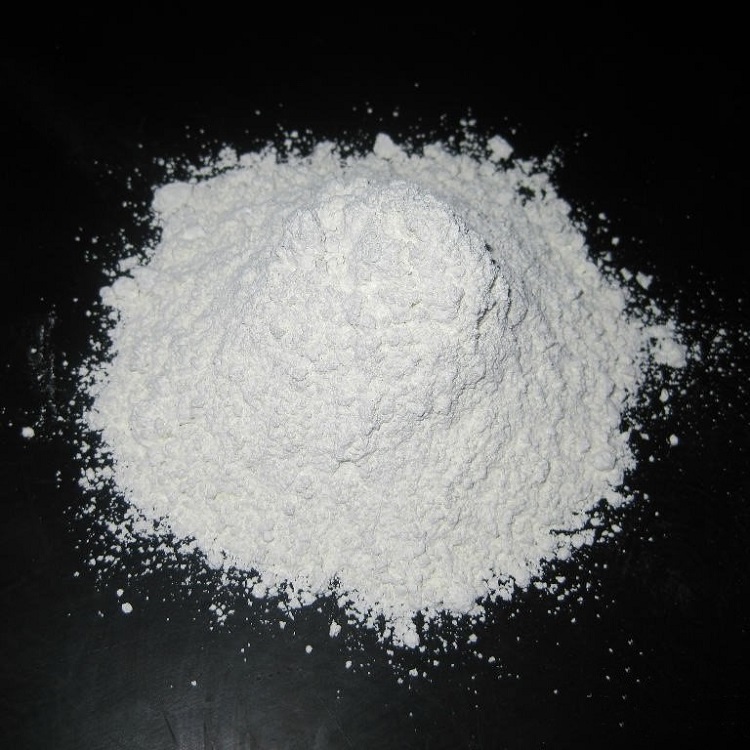
Khat Group supplies alpha aluminum oxide (α-Al₂O₃) powder in three purity grades (≥99.5%, ≥98%, ≥95%) and four particle-size ranges (<80 µm, <20 µm, <5 µm and <1 µm submicron/nano). Alumina is a versatile engineering ceramic used across electronics, machinery, medical, laboratory, high-temperature systems, and ceramic part fabrication. Custom tubes, rods, plates, substrates, insulators and precision-machined components are supported.
 Ceramics
Yttria-Stabilized Zirconia (YSZ) Powder
High-purity yttria-stabilized zirconia powder — grade KG-ZRO99-20
Khat Group supplies high-purity yttria-stabilized zirconia (YSZ / Y-TZP) powder. Featured commercial grade KG-ZRO99-20 offers ≥99.5% purity with a particle size of <5 µm. Zirconia is a tough engineering ceramic with high strength, wear resistance and excellent surface-finish potential, used for blades, plungers, sleeves, rollers, pins and custom precision components in medical, consumer, industrial and fluid-handling systems.
 Advanced Ceramics
Ceramic Injection Molding Parts (CIM)
High-precision, high-volume complex ceramic components via powder injection molding
Khat Group has developed Ceramic Injection Molding (CIM) technology for manufacturing complex ceramic parts with intricate geometries, tight dimensional tolerances, and excellent surface finish. This process is ideal for high-volume production of small-to-medium components with superior mechanical and thermal properties.
Related reading
 Articles
Alumina (Al₂O₃): Types, Properties & Industrial Applications
Alumina (Al₂O₃) — crystalline forms (α-alumina/corundum, γ, θ, δ, κ, η), properties (hardness 9 Mohs, MP 2050°C, high thermal/electrical insulation), and applications — abrasives, refractories, electrical insulators, biomedical implants, catalyst supports, armor, wear parts. Grades: smelter, calcined, tabular, fused, reactive.
 Articles
Ceramic Injection Molding (CIM): Comprehensive Technical Review
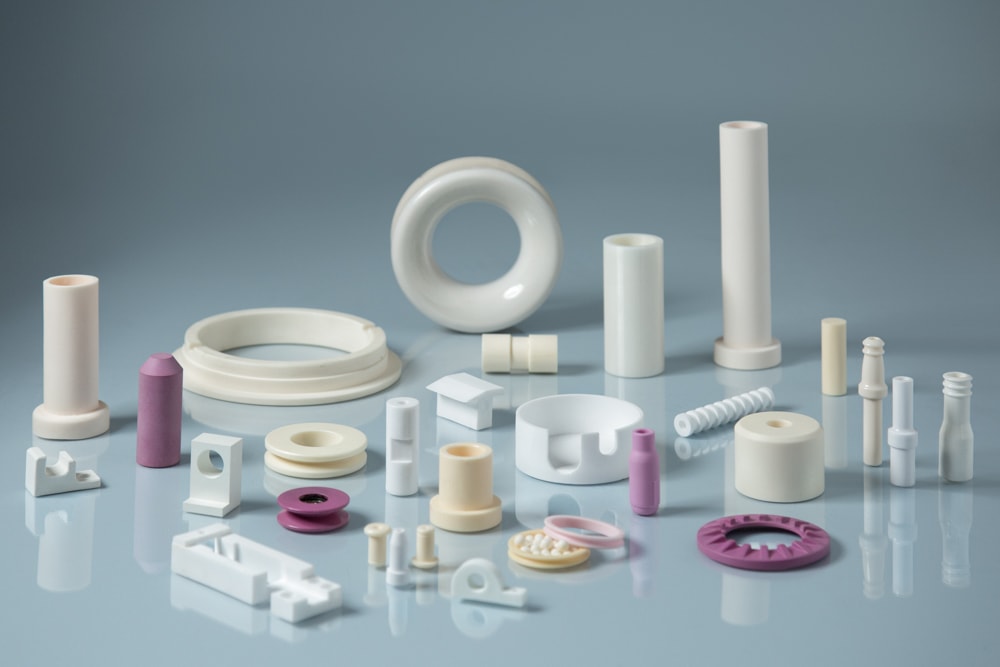
In-depth review of Ceramic Injection Molding (CIM) — materials (zirconia, alumina, silicon nitride), binder systems & debinding, process parameters, quality control, and defect prevention. Essential reading for engineers and students in advanced ceramics manufacturing.
 Articles
Ceramic Injection Molding Technology: Capabilities & Industrial Applications
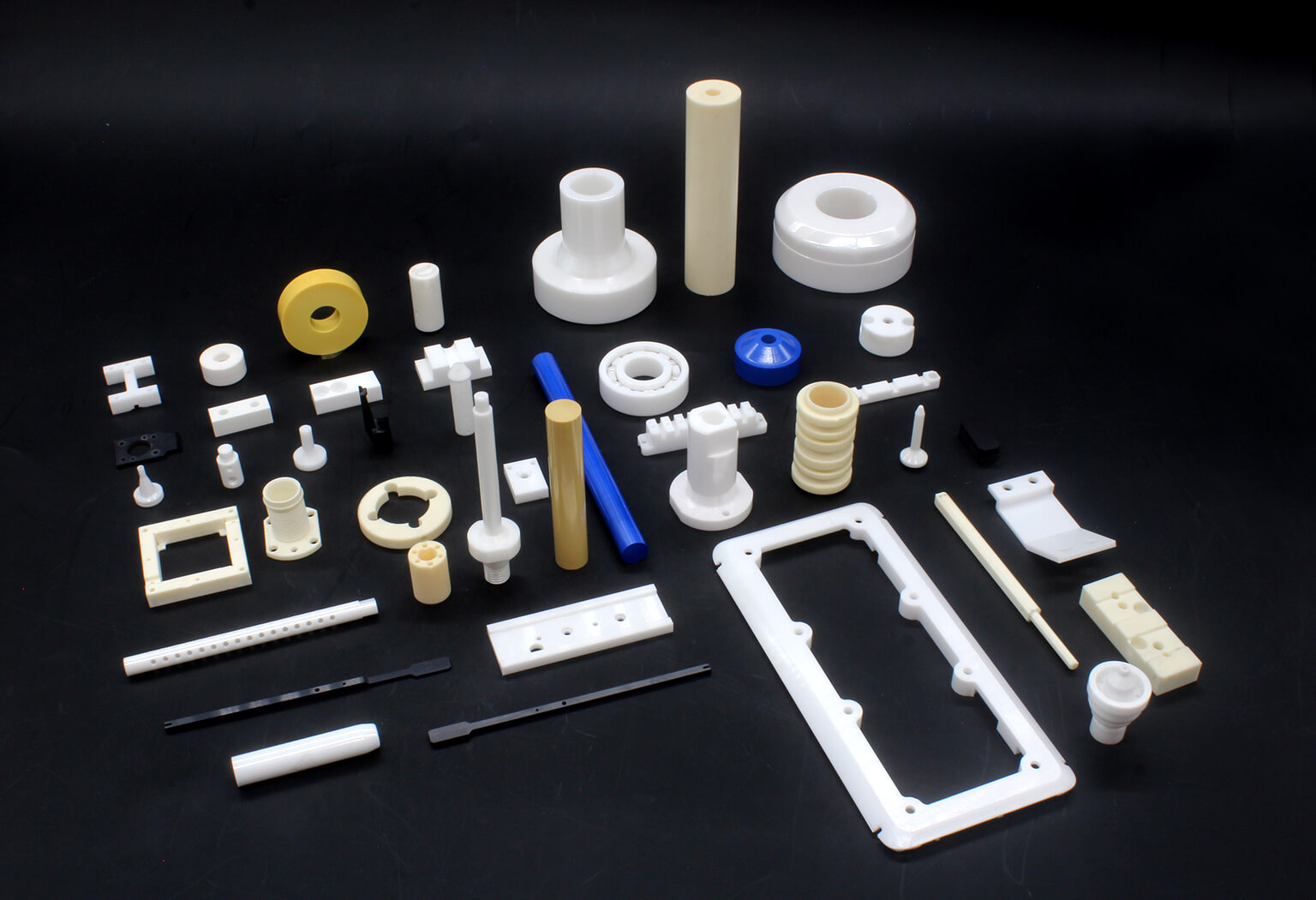
CIM technology delivers complex, high-precision ceramic components with superior thermal, mechanical, and electrical properties. Applications span automotive, medical, electronics, aerospace, and energy sectors. Khat Group provides end-to-end CIM solutions from design to production.