
Ceramic Parts Manufacturing by Spark Plasma Sintering (SPS)
Spark Plasma Sintering (SPS) produces dense, fine-grained technical ceramics with extremely fast heating and short cycle times. Learn how SPS works, how it compares to conventional sintering, its advantages, applications, and part-design considerations.
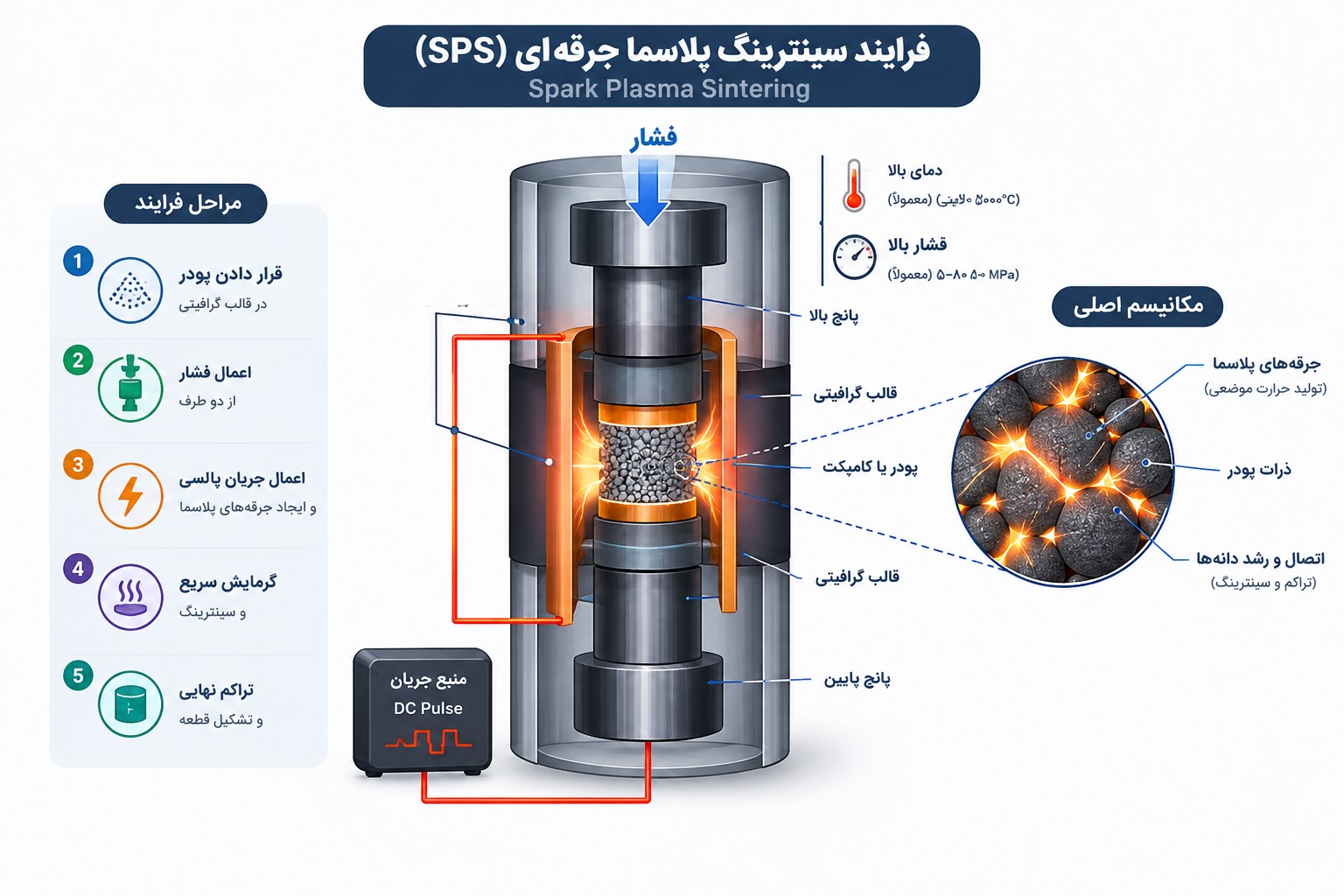
Spark Plasma Sintering (SPS) — also known under the broader term Field-Assisted Sintering Technique (FAST) — is one of the fastest and most precise methods for densifying powders. In this process, powder is loaded into a graphite die and subjected simultaneously to uniaxial pressure and pulsed direct current. The result: extremely rapid heating and near-full densification of a part in minutes — work that can take many hours in a conventional furnace.
How SPS Works
In SPS, the powder is filled into a graphite die (usually with graphite plungers) and the die assembly is placed between two electrodes. Three factors act simultaneously to densify the powder:
- Pulsed DC current — a high-current, low-voltage pulsed current flows through the die and the part, generating Joule heat. The part is heated from within, not from the furnace walls.
- Uniaxial pressure — a hydraulic press applies pressure during heating, accelerating particle rearrangement and densification.
- Spark discharge at particle contacts — localized discharges at particle contact surfaces clean and activate them, making sintering easier.
With heating rates of 100–1000 °C/min and dwell times of a few minutes, the entire sintering cycle is typically completed in less than 30 minutes — while a conventional firing cycle can take 24 hours or more.
Comparison with Conventional Sintering and Hot Pressing
| Parameter | Pressureless (conventional) | Hot pressing | SPS |
|---|---|---|---|
| Heating rate | 2–10 °C/min | ~10 °C/min | 100–1000 °C/min |
| Cycle time | 10–50 hours | 5–10 hours | 10–30 minutes |
| Required sintering temperature | High | Medium | Lower (typically 100–300 °C less) |
| Final density | 95–98% | 98–99% | 99–99.9% |
| Grain growth | Significant | Moderate | Minimal |
| Suited for mass production | Yes | No | Small to medium parts |
Why SPS Is a Game-Changer for Technical Ceramics
- Near-theoretical density — 99.9% density, which is very hard to reach in oxide ceramics by conventional firing; this underpins Khat Group’s 99.9%-density ceramic parts technology.
- Fine microstructure — short times and lower temperatures suppress grain growth, giving higher strength and — in transparent ceramics — better in-line transmittance.
- Sintering refractory materials — silicon carbide, boron carbide, and ultra-high-temperature ceramics (UHTCs), which hardly densify pressurelessly, sinter well in SPS.
- No or low binder — because sintering is rapid, fewer liquid-phase additives are needed, and parts are often sintered without filling additives — yielding higher material purity.
- Composites and graded materials — precise control of process parameters enables sintering ceramic–metal composites and functionally graded materials.
Materials and Applications
| Material | Example applications |
|---|---|
| Zirconia (ZrO₂) | Dental implants, cutting tools, wear parts |
| Alumina (Al₂O₃) | Electrical insulators, wear parts, transparent ceramics |
| Silicon carbide (SiC) | Armor, heating elements, high-temperature mechanical parts |
| Boron carbide (B₄C) | Lightweight armor, wear nozzles, control rods |
| Tungsten carbide (WC-Co) | Cutting tools, dies, wear components |
| Transparent ceramics (alumina, YAG, magnesia) | Optical windows, high-power lamp envelopes |
| Ultra-high-temperature ceramics (ZrB₂, HfC) | Leading edges of hypersonic vehicles, aerospace components |
Designing Parts for SPS
SPS is powerful, but its constraints must be considered during part design:
- Geometry limited to axisymmetric bodies — powder is pressed in a cylindrical die, so the as-sintered part is typically a cylinder, disc, ring, or rod; the final shape is achieved by machining.
- Graphite die dimensions — part size is limited by the die diameter/height and the machine’s current capacity; large parts become significantly more expensive.
- Density gradients in large parts — as size increases, temperature and density distribution must be controlled via simulation and parameter optimization.
- Production economics — for small-to-medium series and parts that demand full density or a special microstructure, SPS is the optimal choice; for simple parts at very high volumes, conventional sintering remains cheaper.
The Full SPS Part Production Cycle
SPS is only one stage of the production route. A complete cycle includes powder preparation, powder shaping (pre-pressing or pre-forming), die loading and SPS firing, and finally machining and finishing. For complex pre-forms before sintering, read our article on Ceramic Injection Molding (CIM); in many projects, CIM pre-forming and final SPS firing complement each other.
To explore other forming and densification routes, see Khat Group’s technologies page.
Khat Group and SPS Services
Leveraging SPS furnaces and more than a decade of experience in high-temperature processing, Khat Group offers high-temperature synthesis and firing services and ceramic parts design and manufacturing for industrial and research applications.
Order an SPS part: Khat Group provides manufacturing services for all types of ceramic parts via SPS — from material selection and die design to sintering, machining, and final quality control. To discuss your project, contact us.
Further Reading
Khat Group — your partner for precision ceramic parts, from powder to finished component.
Products in this article
Materials and products related to what you read.
 Advanced Ceramics Featured
 Ceramic Injection Molding Parts (CIM)
High-precision, high-volume complex ceramic components via powder injection molding
Khat Group has developed Ceramic Injection Molding (CIM) technology for manufacturing complex ceramic parts with intricate geometries, tight dimensional tolerances, and excellent surface finish. This process is ideal for high-volume production of small-to-medium components with superior mechanical and thermal properties.
 Ceramics Featured
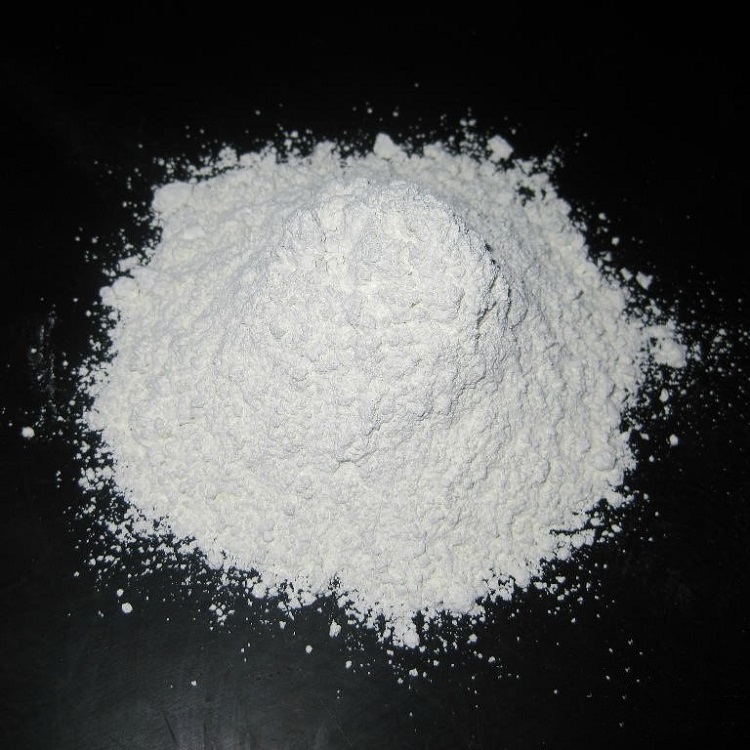
 Alpha Alumina (α-Al₂O₃)
High-purity alpha aluminum oxide powder — three purity grades, four particle-size ranges
Khat Group supplies alpha aluminum oxide (α-Al₂O₃) powder in three purity grades (≥99.5%, ≥98%, ≥95%) and four particle-size ranges (<80 µm, <20 µm, <5 µm and <1 µm submicron/nano). Alumina is a versatile engineering ceramic used across electronics, machinery, medical, laboratory, high-temperature systems, and ceramic part fabrication. Custom tubes, rods, plates, substrates, insulators and precision-machined components are supported.
 Ceramics Featured
 Yttria-Stabilized Zirconia (YSZ) Powder
High-purity yttria-stabilized zirconia powder — grade KG-ZRO99-20
Khat Group supplies high-purity yttria-stabilized zirconia (YSZ / Y-TZP) powder. Featured commercial grade KG-ZRO99-20 offers ≥99.5% purity with a particle size of <5 µm. Zirconia is a tough engineering ceramic with high strength, wear resistance and excellent surface-finish potential, used for blades, plungers, sleeves, rollers, pins and custom precision components in medical, consumer, industrial and fluid-handling systems.
Related reading
 Articles
 Alumina (Al₂O₃): Types, Properties & Industrial Applications
Alumina (Al₂O₃) — crystalline forms (α-alumina/corundum, γ, θ, δ, κ, η), properties (hardness 9 Mohs, MP 2050°C, high thermal/electrical insulation), and applications — abrasives, refractories, electrical insulators, biomedical implants, catalyst supports, armor, wear parts. Grades: smelter, calcined, tabular, fused, reactive.
 Articles
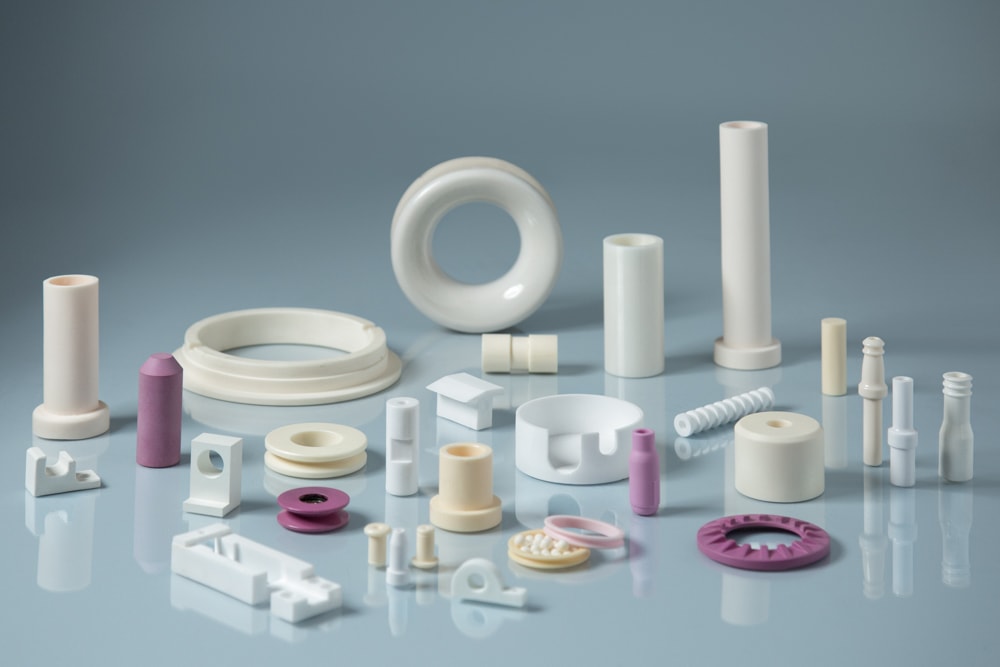
 Ceramic Injection Molding (CIM): Comprehensive Technical Review
In-depth review of Ceramic Injection Molding (CIM) — materials (zirconia, alumina, silicon nitride), binder systems & debinding, process parameters, quality control, and defect prevention. Essential reading for engineers and students in advanced ceramics manufacturing.
 Articles
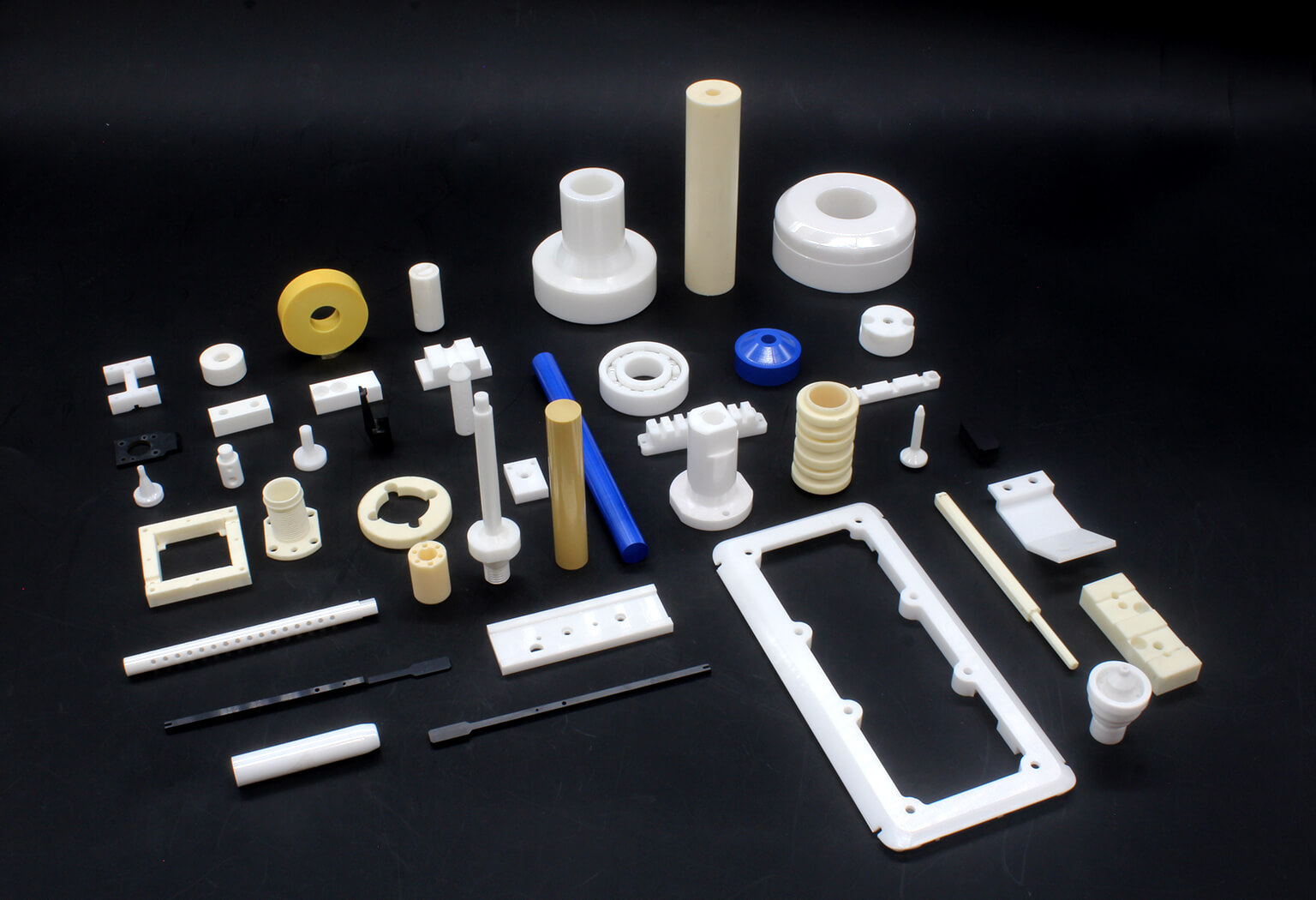
 Ceramic Injection Molding Technology: Capabilities & Industrial Applications
CIM technology delivers complex, high-precision ceramic components with superior thermal, mechanical, and electrical properties. Applications span automotive, medical, electronics, aerospace, and energy sectors. Khat Group provides end-to-end CIM solutions from design to production.